

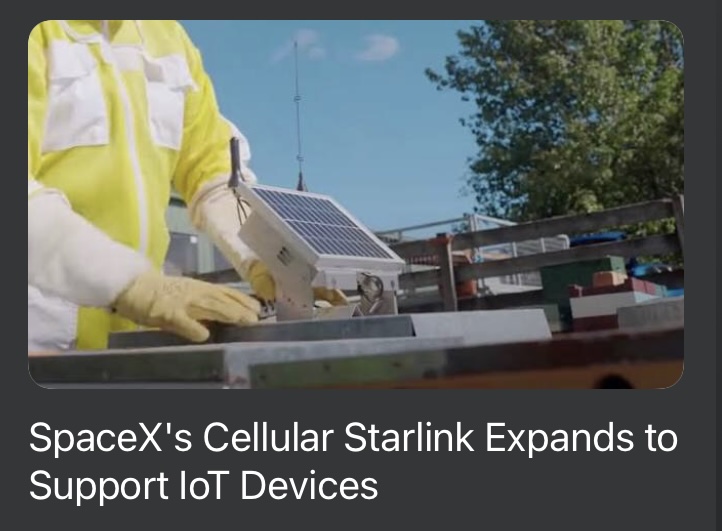
AYROTV Tech & Innovation — SpaceX is taking its Starlink satellite internet to the next level by expanding cellular connectivity to support Internet of Things (IoT) devices. This move could revolutionize global IoT networks, enabling seamless communication for smart sensors, asset trackers, and remote monitoring systems—even in the most isolated locations.
What’s Changing?
- Direct-to-Cell Starlink: SpaceX’s satellites will now connect with standard LTE-enabled IoT devices, eliminating the need for specialized hardware.
- Global Coverage: From agricultural sensors in rural fields to shipping containers at sea, IoT devices will stay online without relying on ground-based cellular towers.
- Low-Power Support: Optimized for energy efficiency, making it ideal for long-term deployments like environmental monitoring.
Why It Matters
Traditional cellular networks leave massive coverage gaps, but Starlink’s satellite-based approach ensures IoT devices remain connected anywhere on Earth. Potential applications include:
- Precision farming (soil sensors, livestock tracking)
- Supply chain logistics (real-time cargo monitoring)
- Disaster response (emergency beacons in off-grid areas)
Challenges Ahead
- Latency vs. Bandwidth: Satellite links may not match 5G speeds but excel in remote coverage.
- Regulatory Hurdles: SpaceX must navigate spectrum licensing across different countries.
What’s Next?
SpaceX plans to beta-test IoT connectivity in 2025, with commercial rollout expected by 2026. Competitors like Amazon’s Project Kuiper are racing to catch up.
Will satellite-powered IoT unlock the next wave of smart infrastructure, or will limitations hold it back? Share your thoughts!
Stay updated on cutting-edge tech at AYROTV.COM.