Somalia Embraces Regional Integration, Announces Rollout of Kiswahili in Schools and Universities
MOGADISHU, Somalia – In a landmark move for cultural and regional integration, the Federal Republic of Somalia has announced plans to officially roll out the teaching of the Kiswahili language in its schools and universities.
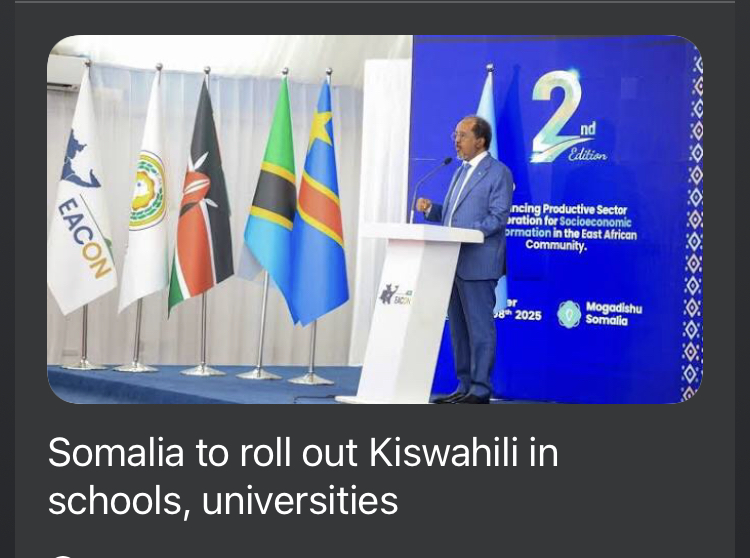
This strategic decision was highlighted during the recent Spring Productive Sector Session for Socioeconomic Transformation in the East African Community (EAC), underscoring Somalia’s commitment to deepening its ties within the bloc it recently joined.
A Key to Unlocking Regional Ties
The adoption of Kiswahili is more than an educational reform; it is a direct investment in Somalia’s socioeconomic future within the East African Community. As the most widely spoken language in the EAC, serving as a lingua franca for millions, Kiswahili is a vital tool for:
- Trade and Commerce: Facilitating easier business transactions and economic cooperation with neighboring countries like Kenya, Tanzania, Uganda, and Rwanda.
- Cultural Integration: Fostering a stronger sense of shared identity and community among East Africans, breaking down communication barriers.
- Diplomacy and Mobility: Enhancing Somalia’s participation in EAC institutions and creating more opportunities for its citizens to work and study across the region.
Aligning with EAC Goals
Somalia’s accession to the EAC in 2023 marked a significant step in its political and economic journey. The decision to integrate Kiswahili into its national curriculum demonstrates a proactive effort to meet the community’s aspirations. The language is not only a practical tool for communication but also a symbol of pan-Africanism and shared heritage.
The announcement at the Socioeconomic Transformation session indicates that Somalia views linguistic integration as a key pillar for achieving the broader goals of the EAC, which include a common market, a monetary union, and ultimately, a political federation.
Implementation and Future Outlook
While the government has announced the rollout, the specifics regarding curriculum development, teacher training, and a phased implementation timeline are yet to be disclosed. This will be a significant undertaking for Somalia’s Ministry of Education, but one with immense long-term benefits.
This move places Somalia in line with other EAC partner states that are also promoting Kiswahili. The language’s growing prominence was further cemented in 2021 when the United Nations designated July 7 as World Kiswahili Language Day.
Somalia’s embrace of Kiswahili signals a forward-looking vision, aiming to empower its youth to fully participate in and contribute to the East African community’s collective future.
AyroTV.com will continue to follow this story and bring you updates on the implementation process. For more news on East African integration, policy, and innovation, stay with us.