
AYROTV.COM — ANALYSIS
A Continent Dividing: The Tectonic Forces Shaping the Somali People’s Past and Future
A geological spectacle unfolding in the Horn of Africa offers a profound metaphor for a global diaspora, as the Somali community navigates its own social and political rifts.
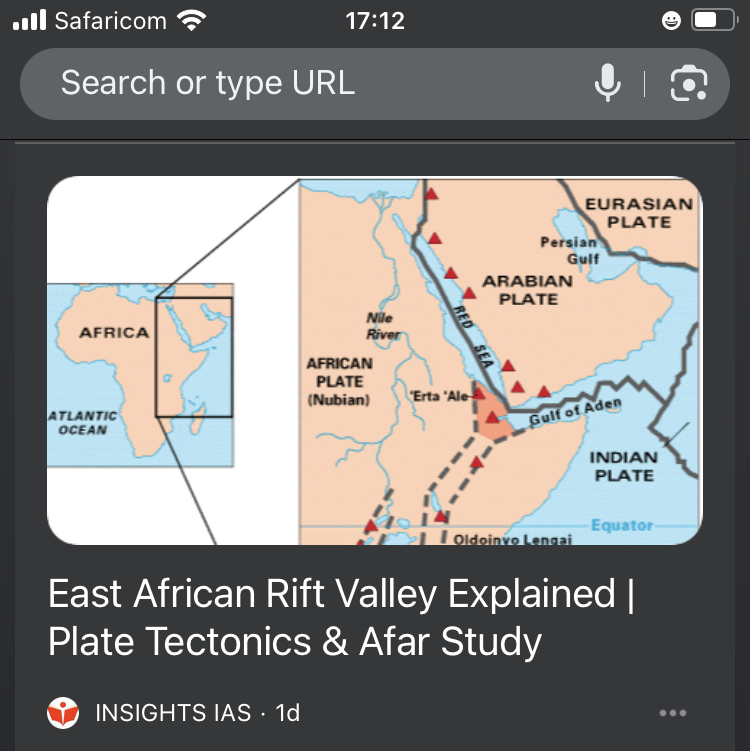
NAIROBI, KENYA — While Somali communities in places like Minnesota face human-made political fault lines, the very land of their ancestry is undergoing one of the planet’s most dramatic physical transformations. The East African Rift Valley—a colossal, 3,000-mile-long tear in the Earth’s crust—is slowly, inexorably, splitting the African continent in two. This geological drama provides a powerful backdrop to the story of the Somali people: a narrative of seismic change, resilience, and the shaping of a new world from the fragments of the old.
The Great Rift: Where a Continent Breaks Apart
Satellite images and geological studies reveal a stark reality: the African Plate is fracturing into two sub-plates—the Nubian Plate to the west and the Somali Plate to the east. This divergent boundary runs like a scar from the Gulf of Aden in the north, through Ethiopia and Kenya, and down into Mozambique. At the Afar Depression in Ethiopia—often called the “cradle of humankind”—the rift is at its most active and visible.
Here, at places like the Erta ‘Ale volcano, one of Earth’s few permanent lava lakes, the planet’s mantle is exposed, boiling and bubbling as it creates new crust. “It’s the one place on land where we can see the processes that normally occur miles beneath the ocean floor,” explains Dr. Celia Mwangi, a geophysicist at the University of Nairobi. “We are witnessing, in real geological time, the birth of a new ocean.”
A Metaphor in Motion: Displacement and New Formation
This process, occurring over tens of millions of years, mirrors the Somali experience in poignant ways:
- Divergence: Just as tectonic forces pull land masses apart, conflict and famine have displaced populations, creating one of the world’s most significant global diasporas.
- Volcanic Resilience: The ferocious volcanic activity in the rift, like the enduring Erta ‘Ale, parallels the resilience of Somali culture—intense, enduring, and capable of creating new foundations from hardship.
- A New Landscape: The eventual result of the rift will be a new sea, splitting off the Horn of Africa. Similarly, the global Somali community is forging a new identity, shaped by both its ancestral roots and its new homes from Minneapolis to Stockholm.
Political Tectonics and Global Echoes
The forces shaping the physical Horn of Africa are as relentless as the political and social pressures facing its people worldwide. The recent targeting of the Somali community in Minnesota’s political discourse represents a different kind of “fault line”—one of identity and belonging.
“There is a deep irony,” notes Professor Abdi Hassan, a historian of the Horn of Africa. “The land of our origin is literally breaking apart and reforming. Our people, through global migration, are also breaking from old contexts and forming new communities. This is a story of incredible adaptation. To attack that adaptation is to misunderstand a fundamental strength.”
Looking Ahead: Millennia of Change
The new ocean forming in East Africa won’t fully emerge for another 5 to 10 million years. The journey of the Somali diaspora is, in human terms, just beginning. Both stories are about navigating profound change—whether caused by the movement of continents or the movement of people.
The lesson from the rift may be one of perspective: what appears as a destructive split can also be a creative force, giving rise to new landscapes, new opportunities, and new definitions of home.
AYROTV.COM connects the stories of people to the planet. From the tectonic shifts of the Earth to the social shifts of our communities, we provide context, depth, and understanding.