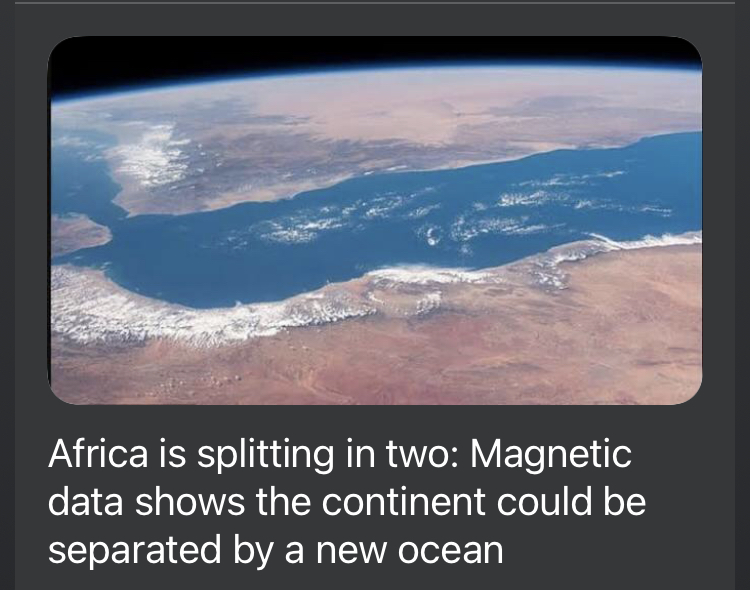
A Continent in Motion: Magnetic Data Reveals Africa is Splitting in Two, Forging a New Ocean
Scientists have long known that the Earth’s surface is dynamic and ever-changing, but new evidence points to one of the most dramatic geological transformations in modern history: the African continent is slowly tearing apart, and the birth of a new ocean could be the ultimate result.
For millions of years, the tectonic plates beneath our feet have been in a constant, slow-motion dance. Now, a groundbreaking study analyzing magnetic data has provided stunningly clear evidence of this process in action along the East African Rift System (EARS).

The Great Rift: A Geological Wound
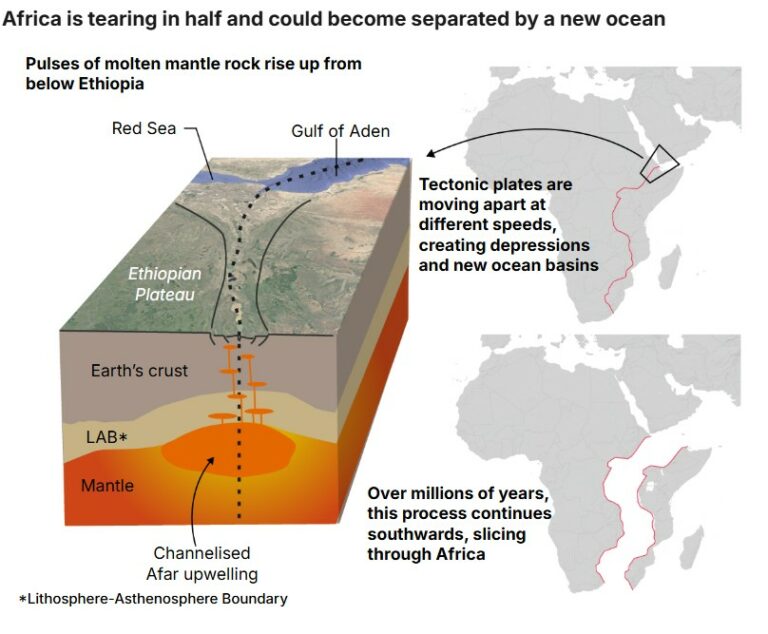
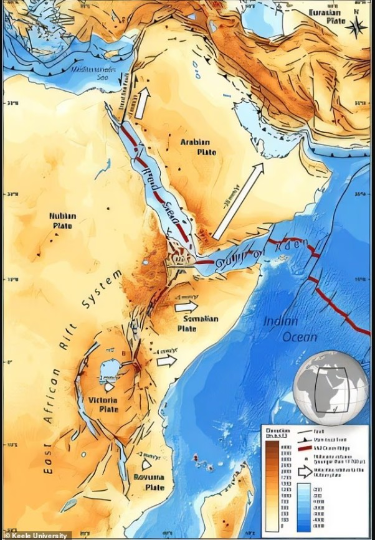
The East African Rift is a massive fracture in the Earth’s crust, stretching over 3,000 kilometers from the Gulf of Aden in the north down to Mozambique in the south. It’s a place where the continental plate is being stretched thin, causing it to fracture and split into two separate plates: the smaller Somali Plate and the larger Nubian Plate.
This rifting process is not just a theoretical model. Its effects are visible on the surface: from the deep valleys and escarpments that define the region’s landscape to frequent seismic activity and the emergence of new volcanic fields.
Magnetic Data: The Smoking Gun
While the surface features tell one part of the story, the crucial new evidence comes from beneath the surface. Researchers have been studying the magnetic properties of the rocks along the rift valley.
As magma rises to fill the cracks created by the rifting, it cools and solidifies into new rock. This new rock contains magnetic minerals that lock in the orientation of the Earth’s magnetic field at the time of their formation. By analyzing this magnetic “fingerprint,” scientists can create a precise map of where brand new crust is being formed.
This magnetic data acts as an undeniable tracer, confirming that the rifting process is mirroring the early stages of how ocean basins are born. The continental crust is being stretched and thinned until it completely breaks, allowing a new oceanic basin to form in its place.
The Birth of a New Ocean
So, what does the future hold? If the rifting continues at its current pace—a few millimeters per year—the entire process will unfold over tens of millions of years. The scenario scientists predict is dramatic:

- The low-lying rift valley will deepen and widen.
- Seawater from the Red Sea and the Gulf of Aden will eventually spill into the expanding rift, flooding the Afar Depression and parts of East Africa.
- This will effectively separate the Horn of Africa (the Somali Plate) from the rest of the continent, creating a new sea that will eventually evolve into a vast, new ocean.
Countries like Zambia and Uganda, currently landlocked, could one day have their own coastlines.
A Reminder of a Dynamic Planet
This incredible phenomenon offers a rare and real-time glimpse into the powerful forces that shape our planet. It’s the same process that, over 138 million years ago, began to separate South America from Africa, creating the South Atlantic Ocean.
The splitting of Africa is not a cause for immediate alarm but a fascinating demonstration that the Earth is very much alive and constantly remaking itself. For geologists, the East African Rift is a unique natural laboratory, offering a front-row seat to the epic, multi-million-year story of continental breakup.
Stay tuned to ayrotv.com for more updates on this and other groundbreaking scientific discoveries.