Africa’s Drone Wars Are Growing, But Are They a Path to Victory?
AYROTV News Desk
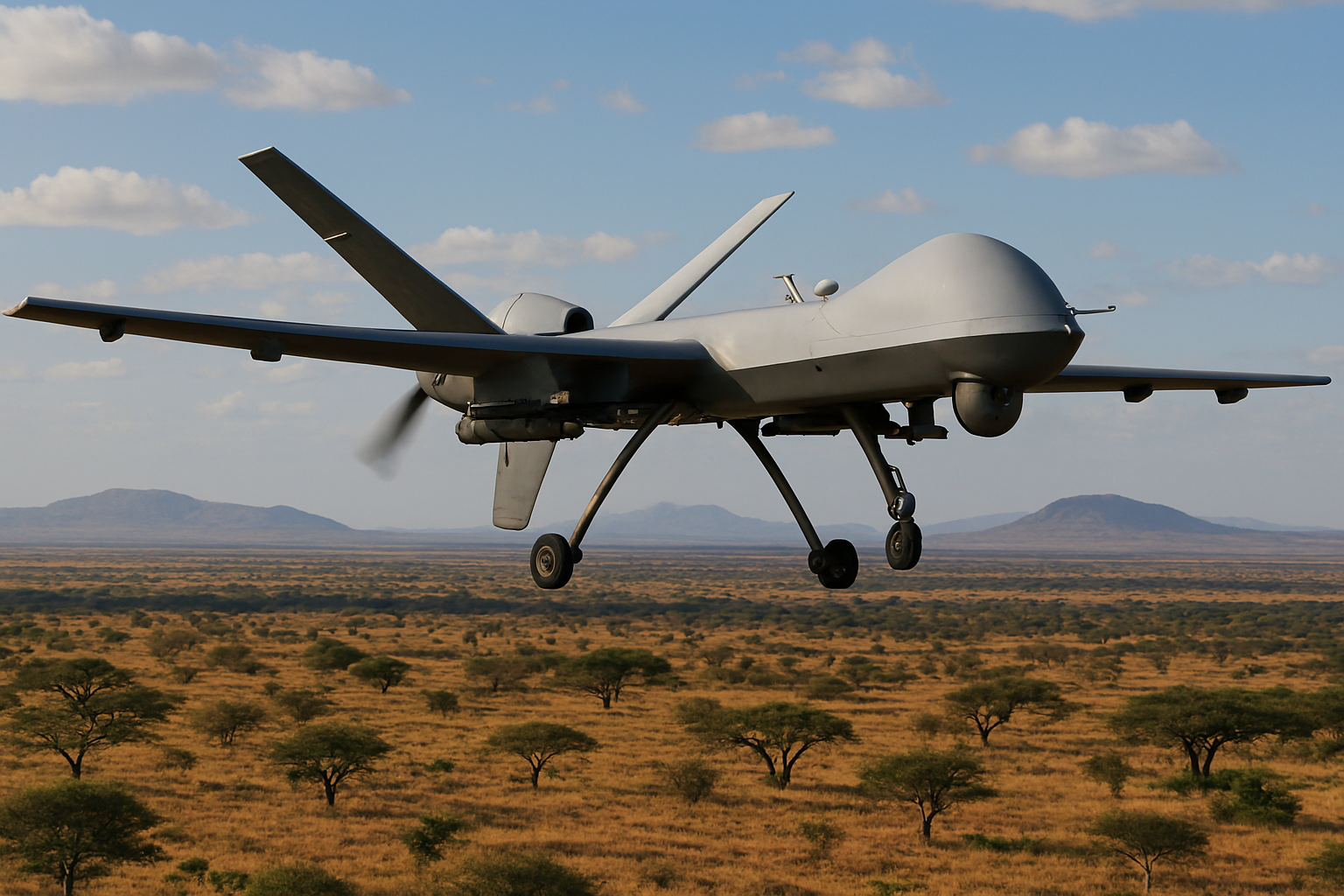
The silent hum of drones has become an increasingly familiar sound in the skies over conflict zones across Africa. From the Sahel to the Horn, governments are turning to unmanned aerial vehicles (UAVs) as a silver-bullet solution to insurgencies and terrorist threats. The deployment of this technology is undeniably growing, but a critical question emerges: are these drone wars actually delivering lasting victory?
A recent analysis underscores a sobering reality: while drone warfare is expanding, it rarely, if ever, secures decisive wins on its own.
The Allure of the Drone
The appeal for African militaries and their international partners is clear. Drones offer a seemingly risk-free way to project power. They provide persistent surveillance over vast, remote territories that are difficult for ground troops to patrol. Most prominently, they enable precision strikes to eliminate high-value targets with no immediate risk to a pilot’s life.
This has led to a significant surge in their use. Countries like Nigeria, Niger, and Ethiopia have built their own drone fleets, often with Chinese, Turkish, or Israeli technology. Meanwhile, external powers like the United States and France have long operated drones from bases in countries like Djibouti and Niger for counter-terrorism missions against groups like Al-Shabaab and ISIS affiliates.
The Strategic Mirage
However, the initial tactical successes often mask deeper strategic failures. The core limitation of drone-centric warfare is its inability to address the root causes of conflict.
- The Whack-a-Mole Effect: Striking a militant leader can disrupt a group temporarily, but it often leads to fragmentation. New, often more radical, leaders emerge, and the cycle of violence continues. The organization adapts, making it a resilient, hydra-headed enemy.
- The Human Terrain Problem: Drones see from above, but they cannot hold ground, build trust with local populations, or understand the complex social and political grievances that fuel insurgencies. Victory in irregular warfare is not just about killing enemies; it’s about winning the support of the people. This requires boots on the ground—both military and civilian—to provide security, governance, and development.
- Collateral Damage and Propaganda: Even the most precise strikes can cause civilian casualties. These incidents are catastrophic for local communities and become a powerful recruitment tool for militant groups. The narrative of a distant, impersonal enemy killing innocents from the sky can fuel more resentment than the strikes suppress.
A Tool, Not a Strategy
The growing consensus among security experts is that drones are a potent tool, but a flawed strategy. They are exceptionally effective for intelligence, surveillance, and reconnaissance (ISR), and for precise, time-sensitive strikes. However, they cannot replace the comprehensive efforts needed for lasting peace.
Sustainable victory requires a political solution. This includes:
- Strengthening governance and the rule of law in marginalised regions.
- Investing in economic development to undermine the recruitment base of extremist groups.
- Conducting effective peace talks and reconciliation processes.
- Building professional, trusted local security forces that can secure and hold territory.
The Bottom Line for AYROTV Readers
The expansion of Africa’s drone wars is a significant trend in modern conflict, but it is not a panacea. Relying on remote-controlled warfare from the skies without a concurrent, robust ground-level political and social strategy risks creating a perpetual state of conflict without a clear path to victory.
As the drone fleets grow, the real challenge for African nations and their allies will be to integrate this technology as part of a wider, more intelligent, and fundamentally human-centric approach to building peace.
What are your thoughts on the use of drone technology in modern African conflicts? Is it a necessary evil or a strategic distraction? Let us know in the comments below or on our social media channels.
Follow AYROTV.com for more in-depth analysis on African security, politics, and technology.