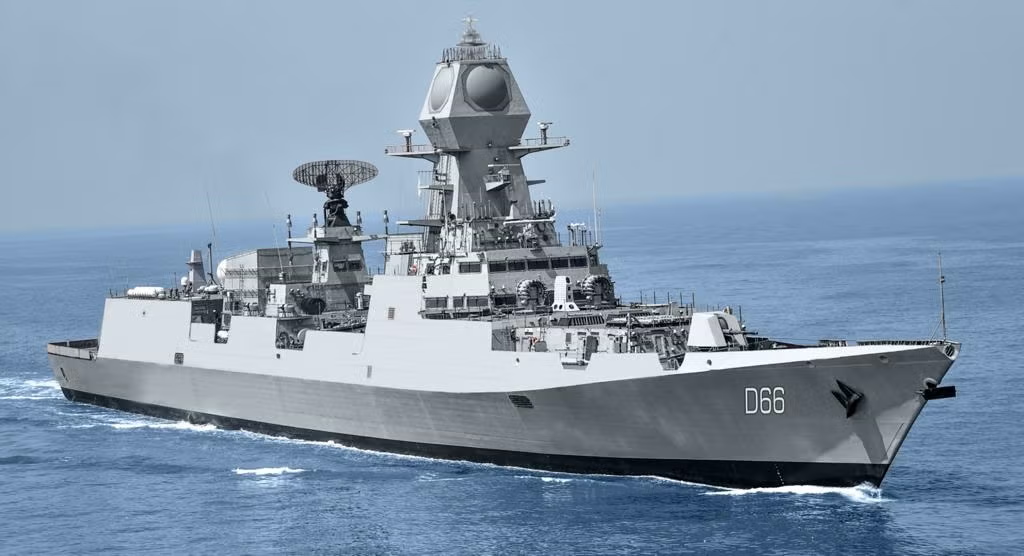
Joint EU-Indian Naval Operation Thwarts Pirates, Secures Tanker Off Somali Coast
AYROTV News Desk
In a significant demonstration of international maritime cooperation, a combined force from the European Union and the Indian Navy successfully intervened to retake a merchant ship used by pirates as a “mothership,” leading to the liberation of a hijacked tanker off the coast of Somalia.
The operation marks a stark reminder that the threat of piracy, which had been suppressed for over a decade, is experiencing a worrying resurgence in the volatile waters of the Western Indian Ocean.
The Operation: A Swift and Coordinated Response
According to naval officials, the operation began when the EU Naval Force (EU NAVFOR) Operation Atalanta and the Indian Navy shared intelligence on a suspected pirate “mothership”—a previously captured vessel used by pirates as a floating base to extend their reach far into the high seas.
Acting on this intelligence, naval units moved to intercept the vessel. In a coordinated effort, forces boarded and secured the pirate ship, effectively cutting off the group’s operational capabilities. This critical action then allowed them to locate and safely secure the hijacked tanker, ensuring the safety of its crew. The successful takeover was conducted without major incident, underscoring the high level of professionalism and coordination between the two naval forces.
A Resurgent Threat in Old Waters
For years, the Gulf of Aden and the Somali Basin were synonymous with piracy, threatening global shipping lanes and costing the world economy billions. A concerted international effort, including robust naval patrols and the hardening of merchant vessels, had largely suppressed these attacks since its peak in 2011.
However, recent months have seen a dramatic uptick in suspicious activity and successful hijackings. Security analysts point to several factors for this resurgence:
- Regional Instability: Ongoing political turmoil and a security vacuum in Somalia have created conditions where pirate networks can regroup.
- Shifting Focus: The international community’s maritime security focus has partially shifted to other hotspots, such as the Red Sea, where Houthi attacks have drawn significant naval resources.
- Opportunism: Pirates are exploiting these gaps in surveillance and patrol coverage, believing the rewards once again outweigh the risks.
A Victory with a Warning
While this joint EU-Indian operation is a clear tactical success, it serves as a powerful warning. It proves that the pirate networks in Somalia remain active, adaptable, and capable of seizing large vessels.
The incident highlights two undeniable truths for global maritime security:
- International cooperation is non-negotiable. No single nation can police the world’s oceans alone. The seamless collaboration between EU NAVFOR and the Indian Navy is the model required to keep sea lanes safe.
- Complacency is the enemy. The fight against piracy is not won; it is only managed. This successful intervention must be a catalyst for renewed and sustained international focus on the root causes of piracy in Somalia and on maintaining a robust naval presence in the region.
The Bottom Line for AYROTV Readers
The daring takeover of the pirate ship is more than just a successful military operation; it is a critical data point in a worrying trend. It signals that the threat of Somali piracy is back and that the international community must relearn the lessons of the past to secure vital maritime trade routes. As geopolitical tensions pull resources in different directions, the need for vigilant, cooperative naval partnerships has never been more apparent.
Do you believe the international community is prepared to handle a full-scale return of Somali piracy? Share your thoughts in the comments below.
Stay with AYROTV.com for continued coverage on African security, geopolitics, and major developments across the continent.