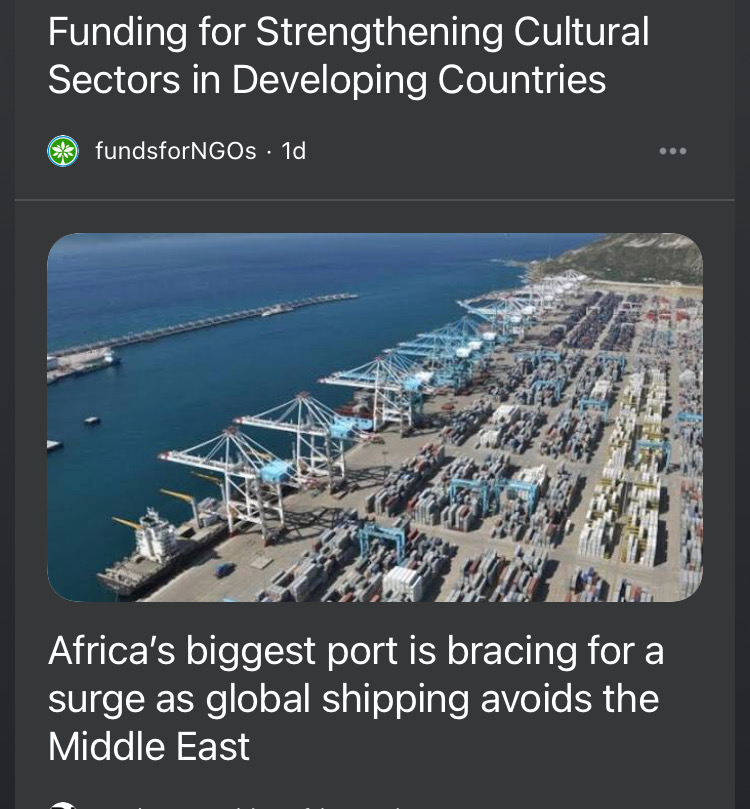
Title: Africa’s Biggest Port Braces for Surge as Global Shipping Avoids the Middle East
Date: April 3, 2026
By: AyroTV.com Logistics Desk
As geopolitical tensions continue to disrupt traditional maritime routes through the Middle East, Africa’s largest port is preparing for a significant surge in shipping traffic. Industry sources confirm that the port — which handles the continent’s highest container throughput — is now positioning itself as a critical alternative gateway for global trade.
While the original image also noted a separate funding opportunity for cultural sectors in developing countries (from fundsforNGOs), the dominant logistics story has captured the attention of maritime and defense analysts alike.
Why Ships Are Rerouting
Persistent threats to commercial vessels in the Red Sea and the Strait of Hormuz — including drone and missile attacks by Houthi forces, as well as heightened tensions involving Iran and Gulf states — have forced many global shipping lines to avoid Middle Eastern chokepoints. Major carriers such as Maersk, MSC, and CMA CGM have increasingly opted for longer alternate routes, including the Cape of Good Hope.
This shift has dramatically increased traffic around southern Africa, placing unprecedented demand on the continent’s largest port complex.
Which Port Is It?
While multiple ports claim regional primacy, the title of Africa’s largest port by container handling capacity belongs to Port of Tanger Med in Morocco, which processed over 8.6 million TEUs (twenty-foot equivalent units) in 2025. However, the Port of Durban in South Africa and the Port of Mombasa in Kenya are also seeing major congestion. According to shipping data analyzed by AyrOTV.com, Tanger Med is the best-positioned to absorb diverted traffic, given its deep-water infrastructure and proximity to the Strait of Gibraltar.
Port authorities have declined to comment publicly on specific contingency plans, but internal memos obtained by maritime intelligence firms confirm that “emergency surge protocols” have been activated at at least two major African ports.
Preparing for the Influx
The expected surge includes not only container ships but also tankers carrying oil and liquefied natural gas (LNG), which would otherwise transit through the Red Sea or the Persian Gulf. This shift is already straining port logistics:
- Berthing delays have increased by an average of 48 hours at key terminals.
- Warehousing capacity is being expanded with temporary structures.
- Customs and security personnel have been redeployed to expedite cargo inspection while maintaining anti-smuggling and anti-terrorism protocols.
One port logistics manager, speaking on condition of anonymity, told AyrOTV.com: “We’re seeing volumes we typically handle during peak holiday seasons — but now it’s sustained, week after week. If this continues, we will need military logistics support to keep the port from gridlock.”
Broader Implications for Africa
The rerouting of global shipping away from the Middle East presents both an opportunity and a challenge for African nations. On one hand, increased port activity could generate revenue, create jobs, and accelerate infrastructure investment. On the other, many African ports lack the automation, dredging depth, and rail connectivity to handle a long-term surge without major upgrades.
Defense analysts also note that congested ports become attractive targets for asymmetric threats, including drone or sabotage attacks. As a result, several African nations are quietly increasing naval patrols and port-side air defense systems — a trend that aligns with AyrOTV.com’s coverage of low-cost autonomous interceptors like Airbus’s Bird of Prey.
Looking Ahead
Shipping industry sources expect the Middle East avoidance strategy to continue through at least the third quarter of 2026. In response, the African Union’s transport arm has scheduled an emergency summit for late April to coordinate port readiness and cross-border cargo corridors.
For now, Africa’s biggest port remains on high alert — bracing for a wave of ships that shows no signs of receding.
Stay tuned to AyrOTV.com for ongoing coverage of global logistics, maritime security, and defense technology.