

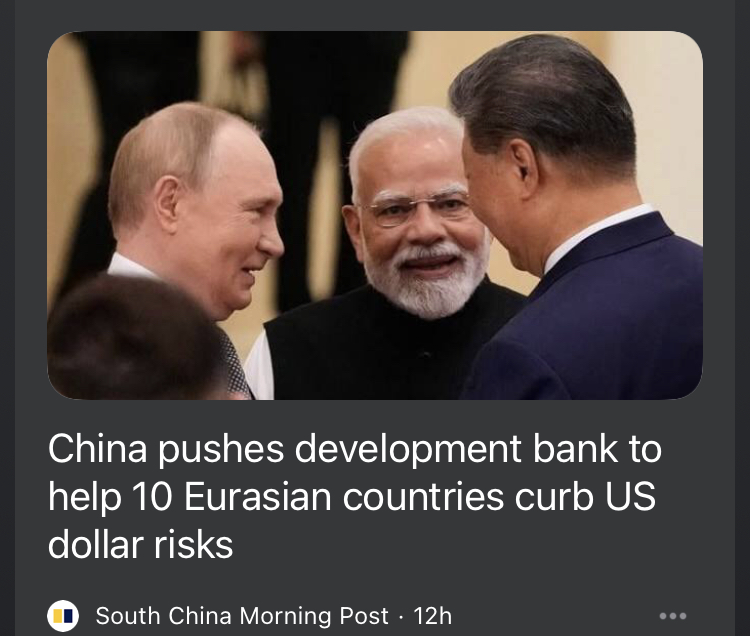
China Advocates for Development Bank to Shield Eurasian Nations from US Dollar Risks
HONG KONG – In a significant move to reduce global reliance on the US dollar, China is pushing for a development bank to implement measures that would help ten Eurasian countries mitigate currency risks associated with the greenback. The initiative, reported by the South China Morning Post, marks a concerted effort by Beijing to create a more dollar-independent financial ecosystem within its sphere of influence.
The move primarily involves the Shanghai-based New Development Bank (NDB), often referred to as the “BRICS Bank,” which was established by Brazil, Russia, India, China, and South Africa. China is reportedly urging the bank to expand its tools to help member nations and partners reduce their exposure to dollar volatility and the impact of US monetary policy and sanctions.
The Strategy: Local Currency Financing
The core of the proposal is to boost lending in the local currencies of member countries rather than the US dollar. This would:
- Reduce Exchange Rate Risk: Borrowing nations would avoid the danger of their local currency depreciating against the dollar during the loan period, which can dramatically increase the real cost of repayment.
- Bypass US Financial Systems: By settling transactions in yuan, rubles, or other local currencies, countries can potentially insulate themselves from the reach of US sanctions and dollar-dominated payment networks like SWIFT.
- Promote the Chinese Yuan (CNY): A key beneficiary of this strategy is the Chinese yuan itself. As the NDB issues more loans in CNY, it boosts the currency’s international profile and facilitates its use as a viable alternative reserve currency.
Geopolitical Motivations
This push is not merely an economic calculation; it carries profound geopolitical weight.
- De-Dollarization: China has been a leading voice in the global “de-dollarization” trend, seeking to challenge the dollar’s hegemony as the world’s primary reserve currency.
- Strategic Autonomy: For the ten Eurasian nations—which likely include partners in the Shanghai Cooperation Organisation (SCO) and Belt and Road Initiative (BRI)—this offers a path toward greater financial autonomy from Western-led institutions like the International Monetary Fund (IMF) and World Bank.
- Countering US Influence: The effort is widely seen as a direct response to the United States’ use of its financial power as a foreign policy tool, particularly the use of economic sanctions against countries like Russia and Iran.
Implications for Global Finance
While a full-scale replacement of the dollar is unlikely in the short term, China’s persistent efforts are slowly creating a parallel financial infrastructure. The success of this initiative with the NDB could encourage other multilateral development banks to follow suit, further fragmenting the global financial order into competing blocs.
For African and developing nations watching closely, this presents both an opportunity and a choice. Access to alternative financing without strict dollar-dependent conditionalities is attractive. However, it also means navigating an increasingly complex geopolitical landscape between traditional Western powers and a rising China-led axis.
AyroTV will continue to monitor the developments of this strategy and its impact on global trade and finance.
About AyroTV: AyroTV is your premier destination for insightful analysis and breaking news on global economics, international relations, and their impact on Africa and the world.
Source: South China Morning Post