

The Silent Struggle: How Money and Mental Health Are Locked in a Vicious Cycle
Intro: The Taboo Twosome
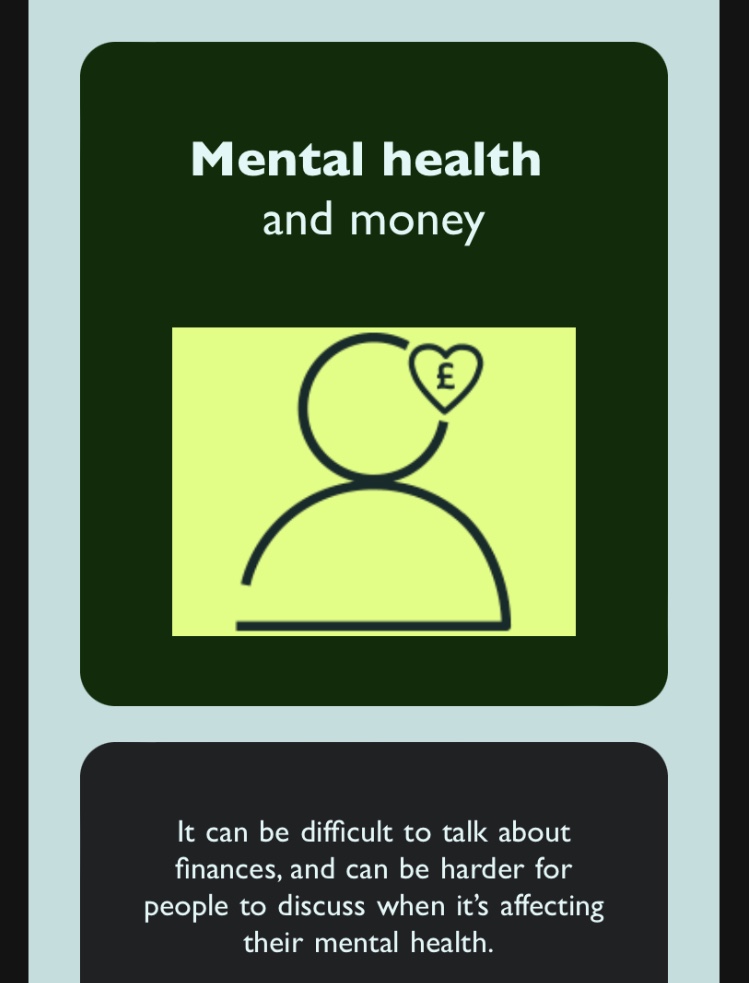
We talk about money. We talk about mental health. But we rarely talk about the powerful, often destructive, link between the two. It’s a conversation shrouded in a double layer of silence and shame. As the simple truth in the image above states: “It can be difficult to talk about finances, and it can be harder for people to discuss when it’s affecting their mental health.”
This isn’t just a passing observation; it’s the reality for millions. Financial stress isn’t just a number in a bank account—it’s a weight on the mind, a constant source of anxiety that can cripple your well-being. And conversely, poor mental health can make managing money feel like an impossible task.
Let’s break the silence and explore this complex relationship.
The Two-Way Street: How Money and Mental Health Impact Each Other
This isn’t a one-way street. It’s a vicious, self-reinforcing cycle.
1. How Money Problems Worsen Mental Health:
Financial instability is a primary source of stress. When you’re worried about rent, debt, or putting food on the table, your body is in a near-constant state of fight-or-flight. This chronic stress can manifest as:
- Anxiety and Panic Attacks: The “what ifs” become a relentless soundtrack. What if I lose my job? What if I can’t pay this bill?
- Depression: Feelings of hopelessness, shame, and failure can set in, making it hard to get out of bed, let alone tackle a budget.
- Sleep Problems: Lying awake at night running through numbers and worst-case scenarios.
- Strained Relationships: Money is a leading cause of arguments with partners and family, leading to isolation and loneliness.
2. How Mental Health Challenges Worsen Financial Stability:
On the flip side, when you’re struggling with your mental health, your ability to manage finances often plummets. This isn’t a character flaw; it’s a symptom.
- Reduced Earning Capacity: Depression or anxiety can make it difficult to perform at work, seek a promotion, or even show up consistently.
- Executive Dysfunction: Conditions like depression, ADHD, and anxiety can impair the very skills needed for financial management: organization, focus, planning, and follow-through. Opening a bill or logging into your bank account can feel like a monumental task.
- Impulsive or Avoidant Behavior: Some may engage in “retail therapy” for a temporary dopamine boost, while others may avoid dealing with finances altogether, leading to late fees, mounting debt, and missed payments.
Breaking the Cycle: Practical Steps Toward Financial and Mental Wellness
Acknowledging the problem is the first step. The next is taking small, manageable actions to break the cycle. You don’t have to solve everything at once.
For Your Mental Health:
- Talk About It: This is the hardest but most crucial step. Confide in a trusted friend, family member, or therapist. Simply saying, “I’m really stressed about money,” can lift a weight off your shoulders.
- Practice Self-Compassion: Remind yourself that your financial situation does not define your worth. You are not a “bad” person for having debt or struggling to save.
- Utilize Free Resources: Apps like Headspace and Calm offer free meditations. Many communities offer low-cost or sliding-scale therapy options.
For Your Financial Health:
- Automate What You Can: Set up automatic payments for bills to avoid late fees and the mental burden of remembering due dates. Even a small, automatic transfer to a savings account can build a safety net without you having to think about it.
- Start with a “Financial Inventory”: You don’t need a complex budget day one. Just take 30 minutes to list your income, your essential expenses, and your debts. Knowledge is power, and it reduces the fear of the unknown.
- Seek Free Financial Guidance: Non-profit credit counseling agencies can help you create a debt management plan. Look for reputable, free sources of financial education online.
A Final Word of Hope
The link between money and mental health is real, powerful, and often invisible to the outside world. But by bringing it into the light, we can start to dismantle the shame and isolation that fuels it.
Remember, progress is not linear. Some days, your best might just be getting through the day. Other days, you might feel strong enough to look at your bank statement. Both are victories.
Your financial health and your mental health are deeply connected—and by nurturing one, you begin to heal the other.
If you or someone you know is struggling, remember you are not alone. Reach out. Talk about it. Help is available.
AYROtv.com is committed to fostering conversations about holistic well-being, from mental health to financial empowerment. This article is for informational purposes only and is not a substitute for professional financial or medical advice.