

Subtitle: How a 20th-century Somali script—forgotten by history—is being rediscovered in the age of TikTok and Unicode.
Introduction
In the 1920s, a Somali poet and ruler named Osman Yusuf Kenadid accomplished something extraordinary: he invented a brand-new writing system for the Somali language. Known as the Osmaanya script (or Osmanya), it was a bold assertion of cultural identity during colonial rule—yet today, few outside Somalia know it ever existed.
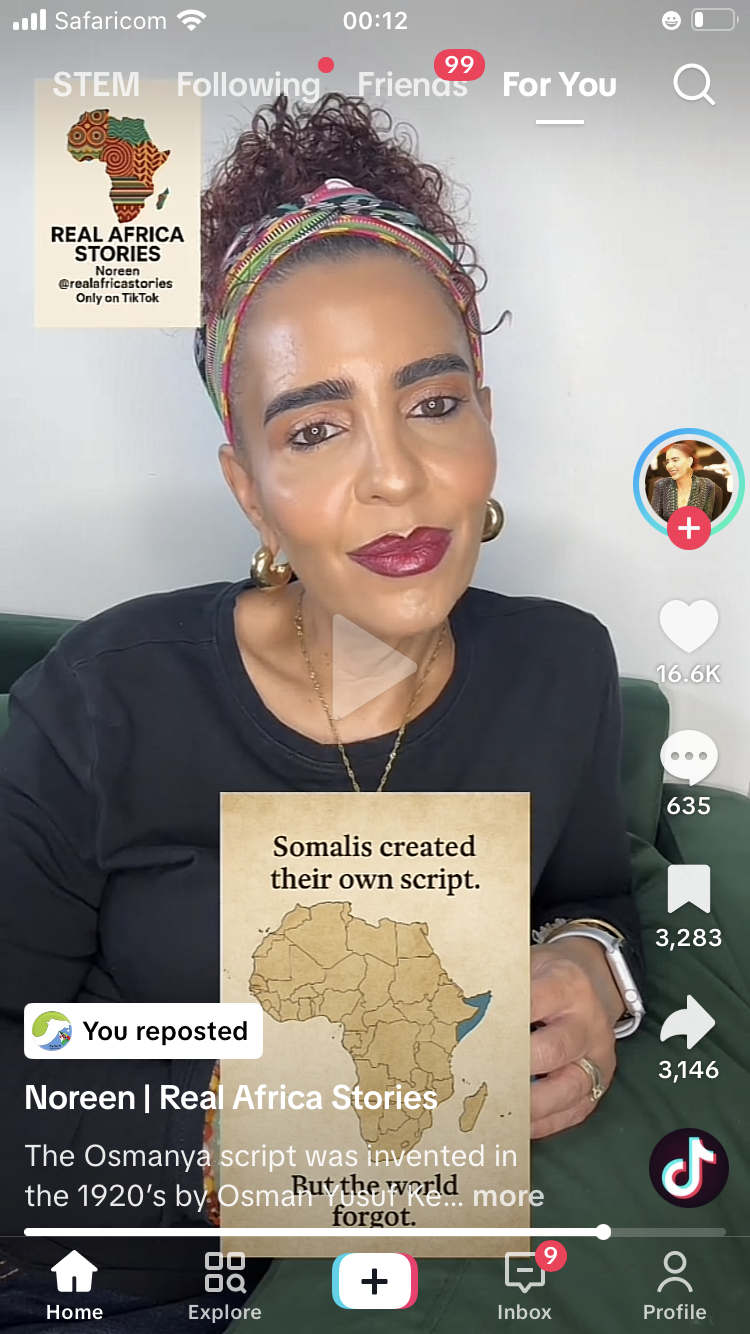
Thanks to a viral TikTok video by Real Africa Stories (run by creator Noreen), this forgotten script is now gaining attention online. But what exactly is Osmaanya, why did it disappear, and could it make a comeback in the digital age?
The Birth of the Osmaanya Script
In the early 20th century, Somalia was under Italian and British colonial rule, and the Somali language had no standardized script. While many wrote Somali using Arabic (Ajami) or makeshift Latin adaptations, Osman Yusuf Kenadid sought a more precise solution.
In 1920-1922, he designed the Osmaanya alphabet, featuring 22 original characters that perfectly captured Somali’s phonetic sounds. Unlike Arabic or Latin, this script was tailored specifically for Somali, making it easier to read and write.
For a brief period, Osmaanya gained traction—used in personal correspondence, poetry, and even administrative documents. It was a symbol of Somali intellectual resistance at a time when colonial powers were imposing foreign languages.
Why Did the Osmaanya Script Fade Away?
Despite its promise, the script faced major challenges:
- Colonial Suppression – European powers favored Latin or Arabic scripts to maintain control.
- Lack of Institutional Support – Without printing presses or government backing, Osmaanya couldn’t spread widely.
- The 1972 Latin Decision – After independence, Somalia’s military regime adopted a Latin-based script as the official writing system to unify the country, sidelining Osmaanya.
By the late 20th century, the script had nearly vanished—until the internet brought it back.
The Digital Revival of Osmaanya
In recent years, there’s been a growing interest in preserving and reviving Osmaanya:
- Unicode Inclusion (2003) – The script was added to the Unicode Standard (U+10480–U+104AF), allowing it to be used digitally.
- Social Media Spotlight – TikTok creators like Real Africa Stories are educating millions about this forgotten script.
- Cultural Pride – Young Somalis and linguists are studying Osmaanya as a symbol of pre-colonial innovation.
Could it return as a cultural or artistic script, much like N’Ko (for Manding languages) or Adlam (for Fulani)? The potential is there.
Why This Story Matters
The Osmaanya script is more than a historical footnote—it’s proof that Africans created their own writing systems, even under colonial rule. Its disappearance wasn’t due to a lack of value, but rather political and systemic erasure.
Now, with digital tools and social media, lost scripts like Osmaanya have a second chance. Whether it becomes a functional writing system again or remains a cultural emblem, its story deserves to be told.
How to Learn More About Osmaanya
Interested in exploring this script? Here’s how:
- Try typing in Osmaanya using Unicode-supported fonts.
- Check out Osmanya archives on Omniglot or Wikipedia.
- Follow creators like Real Africa Stories for more African historical insights.
Final Thought: The Osmaanya script is a reminder that Africa’s history is full of suppressed innovations waiting to be rediscovered. Thanks to the digital age, they’re finally getting their due.
Would you like to see Osmaanya revived? Share your thoughts in the comments!
Published by [AyroTV.com] – Celebrating African Heritage, One Story at a Time.