
AYROTV.COM | EXCLUSIVE ANALYSIS
UN Security Council Votes to Shut Down UN Office in Somalia, Citing Cost and Time Burdens
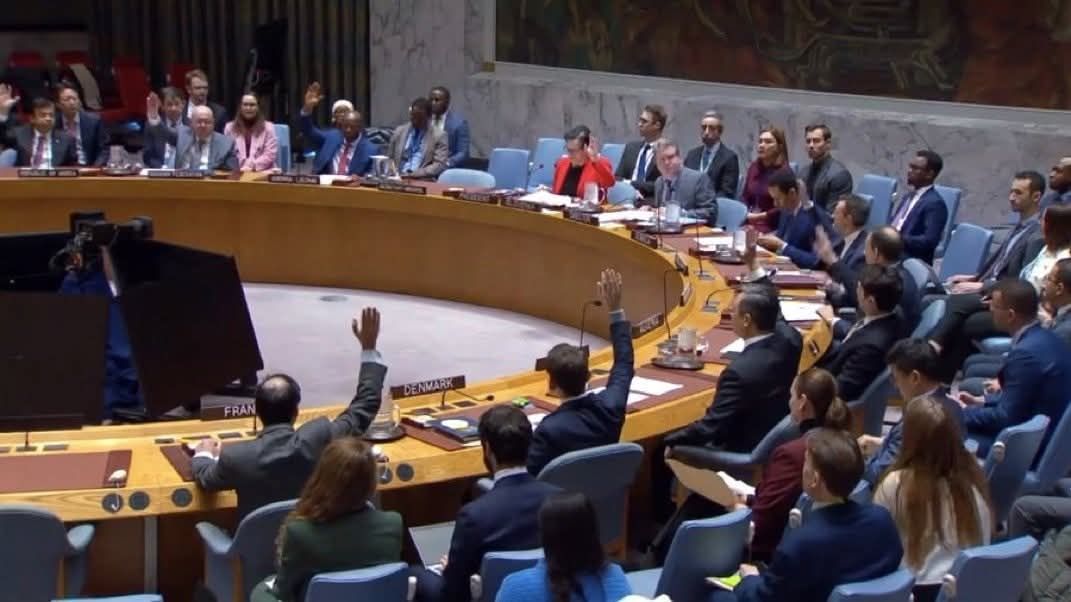
MOGADISHU/SOMALIA – In a decisive move signaling a major shift in international engagement, the United Nations Security Council has voted to terminate the mandate of the United Nations Assistance Mission in Somalia (UNSOM). The closure of the political mission, headquartered in Mogadishu, marks the end of an era of direct, on-the-ground UN political management that began in 2013.
The resolution, adopted with significant backing, did not pass without contention. However, the prevailing argument, strongly articulated by the United States, centered on the immense investment poured into Somalia’s stabilization with what many council members perceive as insufficient long-term returns.
The U.S. Stance: A Question of Return on Investment
During the council session, the U.S. representative delivered a stark assessment that framed the debate. “A significant amount of time and financial resources have been spent on Somalia’s security,” the envoy stated, underscoring a growing fatigue among major donors. The statement highlighted a core frustration: despite over a decade of international support, training, and funding for the Somali National Army (SNA) and African Union Transition Mission in Somalia (ATMIS), the capacity of Somali forces to independently contain Al-Shabaab remains in question.
The U.S. position reflects a broader strategic pivot towards evaluating peacekeeping and political missions through a stricter lens of efficacy, cost, and necessity. The message was clear: the current model of a large-scale UN political presence is no longer deemed sustainable or effective by one of its principal funders.
Implications for Somalia: Sovereignty vs. Support
The closure of UNSOM presents a complex set of challenges and opportunities for the Federal Government of Somalia (FGS).
- On one hand, the move is hailed by some in Mogadishu as a long-awaited affirmation of Somali sovereignty. The government has increasingly asserted its desire to lead its own political and security processes, free from what some perceive as the overbearing oversight of international structures. Proponents argue this will force greater internal accountability and ownership.
- On the other hand, critical observers warn of a dangerous vacuum. UNSOM played a crucial role in mediating between the federal government and member states, supporting constitutional review processes, coordinating human rights monitoring, and facilitating dialogue on critical issues like elections. Its departure removes a key neutral intermediary at a time when internal political tensions persist and the threat from Al-Shabaab remains acute.
A Changing Landscape of Engagement
The shutdown of UNSOM does not equate to a full international withdrawal. The UN’s humanitarian and development agencies will continue to operate. However, the political umbrella that coordinated much of this work with the FGS is now removed.
The international community’s approach appears to be shifting towards a more bilateral and regional model. Expect increased focus on:
- Direct Security Partnerships: Continued, but potentially more conditioned, bilateral military aid and training from partners like the U.S., Turkey, and the UAE.
- ATMIS Drawdown: Increased pressure for the ongoing transition of security responsibilities from ATMIS to Somali forces, according to its scheduled timeline, albeit amid serious concerns.
- Accountability-Driven Aid: Future financial and logistical support is likely to be tightly coupled with demonstrable progress in governance, anti-corruption, and military effectiveness from the Somali government.
Analysis: A Gamble for Peace and Stability
The Security Council’s vote is a monumental gamble. It bets that the Somali state has matured enough to steer its own political future without the day-to-day scaffolding of a UN political mission. The hope in New York and Washington is that this withdrawal will catalyze a new phase of responsible Somali leadership.
The risk, however, is that it removes a critical stabilizing and mediating force prematurely. In the fragile ecosystem of Somali politics and security, the absence of UNSOM could allow existing fissures to widen and complicate the fight against Al-Shabaab.
The coming months will be a critical test. The world is now watching to see if Somalia’s political class can unite to fill the space left by the UN, or if this decision will lead to a period of greater instability. The message from the Security Council is unambiguous: the era of open-ended, unconditional international political management is over. The future of Somalia now rests more squarely than ever in the hands of its own leaders.
For AYROTV.com, this is Eng Muude, reporting on a pivotal moment for Somalia and the United Nations.