
UN Security Council Rejects Iran Sanctions Relief
By AyroTv News Desk
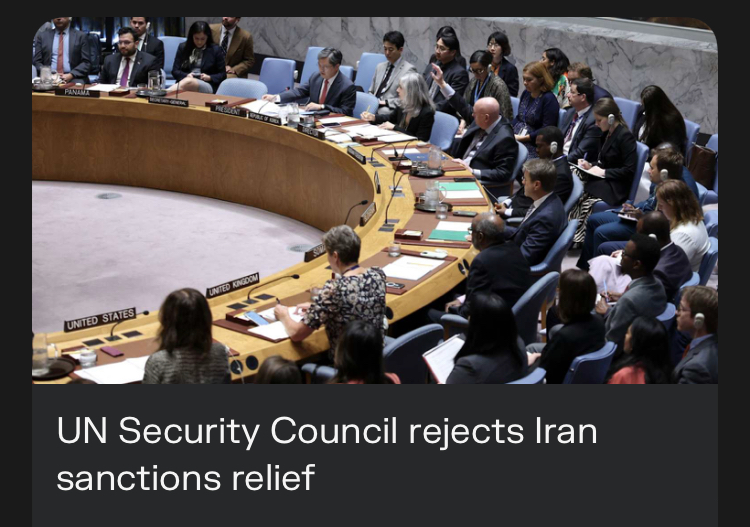
The United Nations Security Council has voted to reject a proposal for sanctions relief on Iran, a decision that underscores the deep divisions among world powers over Tehran’s role in regional security and global diplomacy.
The Decision
During a formal session at UN headquarters, representatives from major powers—including the United States, the United Kingdom, and other council members—debated the proposal before ultimately voting against easing restrictions. The sanctions, originally imposed over concerns about Iran’s nuclear program and regional activities, will therefore remain in place.
What’s at Stake
- ⚖️ Nuclear Tensions: Critics argue that lifting sanctions without stronger guarantees could embolden Iran’s nuclear ambitions.
- 💱 Economic Impact: Sanctions continue to strain Iran’s economy, affecting trade, energy exports, and ordinary citizens.
- 🌍 Regional Stability: The decision reflects broader concerns about Iran’s influence in the Middle East, particularly in conflicts across Syria, Yemen, and Lebanon.
Global Reactions
- Western Powers: The United States and allies welcomed the decision, framing it as necessary to maintain pressure on Tehran.
- Iran’s Position: Iranian officials have consistently argued that sanctions are unjust and hinder humanitarian needs.
- Other Voices: Some nations, particularly in the Global South, have called for a more balanced approach that combines accountability with dialogue.
AyroTv Perspective
At AyroTv, we view this development as more than a diplomatic standoff—it is a reminder of how global governance decisions ripple across continents. For African and Somali communities, the debate around sanctions highlights the delicate balance between sovereignty, international law, and the pursuit of peace. Just as sanctions affect ordinary Iranians, similar global policies often shape the lives of people in developing nations, influencing trade, security, and humanitarian access.
Looking Ahead
The rejection of sanctions relief signals that tensions between Iran and the West are far from resolved. As the Security Council continues to grapple with these issues, the world watches closely—aware that decisions made in New York can alter the course of regional conflicts and global stability.
Would you like me to expand this into a feature analysis—for example, connecting how UN sanctions decisions historically affected African nations, and what lessons Somali policymakers or communities might draw from this moment? That could give AyroTv’s audience a deeper, culturally grounded perspective.